
Dynamic thermal insulation by Helmut Bartussek

logo_small

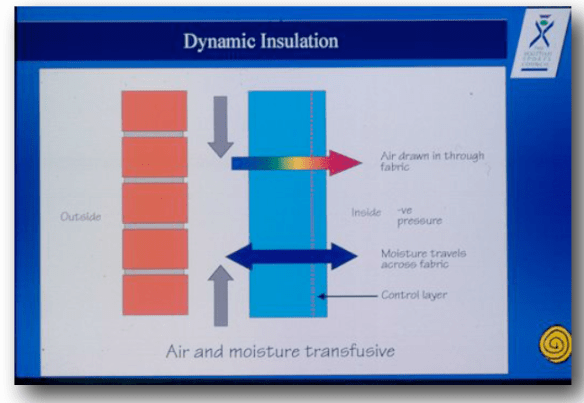
We discussed already about dynamic thermal insulation in a previous post. We already mentioned that it is not only the thermal resistance but also the inside air quality which is important.

But Prof. Dr. Ing. Helmut Bartussek already published in 1982 about the potential of using open porous materials for the construction of healthy buildings and animal sheds. In fact, animal wellness was his first concern, like shown in the following book.

9783702007225-us-300

I guess that his concern about animal wellness introduced him into the world of ventilation through the thermal insulation. In a paper about a roof construction, the principle is well explained. But not only the improved U-value  but also condensation and air quality are discussed. In a second contribution in a magazine for building biology, we find a discussion with an architect about the concept. In another paper, the use of this principle is discussed in roof, walls and floor. The problem of contaminated building air is discussed together with the improved insulation is completely published in another contribution.

I found the first contribution in 1982 when passive housing was totally not a topic. Today, the technique is still promising but not accepted generally. It is quite normal that the classical thermal insulation world will not be in favor for passive housing with only 15 cm cheap thermal insulation.  I also understand that most people are not interested to live in air, sucked through mineral fiber material. I guess that the world is waiting for open porous cellular glass, produced from waste glass with harmless foaming agents. In that perspective, I am motivated by the nice reaction of Gaia arkitekter in Norway.

helmut70


How to fix (GLAPOR) cellular glass boards on a surface

logo_smallWe receive regularly a question about how to fix cellular glass boards on a concrete or brick wall.

Pecimor dkAt GLAPOR, PCI PECIMOR DK is advised to be used. This product, produced by PCI, a branch of BASF,  is a two component system based on bitumen, polymer and cement. Hardening can proceed behind (air tight) the cellular glass plates. The product is also used for XPS plates and advised by BASF. One vessel contains 28 kg product and costs about 60€.

I could find a description pdf in

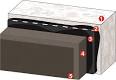
Pecimor applicationA typical application is as follows. The cellular glass board 4  is installed with PCI PECIMOR DK (2,3) on the concrete or brick wall with a consumption up to 4 kg/m² cellular glass or about 9€/m² cost. The price of this product is certainly not negligible in the total thermal insulation cost if we know that 10cm GLAPOR cellular glass is priced about 20€/m².

The product can also be used as cell filling materail to coat the cellular glass were needed. For example, high compressive strength GLAPOR cellular glass can be used to insulate in a cost effective way the foundation cold bridge after coating with this product.


GLAPOR cellular glass is booming

logo_small

It took some time to start up a new process for cellular glass on a real prototype but today the technology is mature. Both gravel and boards production are running at maximum capacity to supply the many projects of our customers. Customers are satisfied with the low cost cellular glass, exactly meeting their expectations while the investor has still a nice return.

frankThe GLAPOR community is like a family, where work is (most of the time) fun. People from Germany, Belgium, Czech Republic, Portugal, Poland, Kazahstan, Ukraine and Russia are working together under the inspiring leadership of Walter Frank. In fact, GLAPOR is the Europe of our dreams without borders, giving welfare to its employees, satisfying its customers and investors and improving nature by recycling glass with a minimum use of energy and negligible consumption of fresh raw materials.

GLAPORlogoThe market started to boom after learning that GLAPOR cellular glass has a comparable price with high density mineral wool with the addition of a lot of advantages like

sandwichThe polymer foams, more and more pushed in the corner by fire incidents have choosen for GLAPOR cellular glass as sandwich partner. GLAPOR cellular glass on top of KINGSPAN PIR is an acceptable solution for a flat roof, eliminating the risk to loose a complete building in a fire incident during a small repair of the water proofing membrane on a roof. On top of that, GLAPOR cellular glass delivers a hard surface under the membrane.
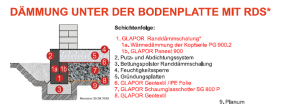
RDSFoamed glass gravel combined with the RDS boards of GLAPOR guarantees a perfect solution for floor insulation without any risk of heat loss due to draft and water ingress.
foundationFor the future, low cost high compressive strength elements will be introduced on the market to eliminate cold bridges at the foundations and other problem zones. Rendering products, designed for GLAPOR cellular glass will be available for the construction of non-combustible facades.

GLAPOR plant

As a consequence, GLAPOR will extend its production capacity in Mitterteich, invest further in R&D and will build new plants all over the world. For all these expansions, GLAPOR is hiring people to join its community.

Sandwich structures with cellular glass

logo_smallIn a benchmarking of thermal insulation materials, it is easily demonstrated that the perfect thermal insulation does not exist:

  • PIR, PUR, XPS and EPS are polymers and in that way combustible.
  • Mineral wool cannot carry a high compressive load, not even at high density.
  • Cellular glass has not a very low thermal conductivity, which can be compensated by thickness.
  • Cellular glass, directly foamed from waste glass has the best ecologic balance and the polymer foams are at the other side.

One approach is by lobbying increasing the weight of the weak point of the competition in order to hide the own weak point. This was the very costly method of the past paid by all the customers for thermal insulation. Much more constructive is a combination with another thermal insulation to eliminate the own weak point.

In some cases, a passive flat roof is requested without any risk of fire transport during reparation of the roof. A large thickness of mineral wool is a possibility but rather high densities are needed. On top of that, free natural convection is not excluded with low temperatures outside. Cellular glass may have an even larger thickness to compensate the larger thermal conductivity. Polymer foams are out of the question due to their built-in combustibility.

sandwichIn Denmark, Kingspan decided to collaborate and has choosen GLAPOR cellular glass as the top layer. Indeed, Kingspan PIR thermal insulation is giving the largest thermal resistance while GLAPOR cellular glass takes care about fire resistance and also delivers a hard protective surface under the water proofing membrane. The system assumes  a high quality vapour screen on the concrete to avoid humidity problems in the PIR. kingspan

celleglaspladerThe combination guarantees the requested U-value, fire resistance and walkability of the flat roof. The thickness and weight of the roof remains below an acceptable limit. The solution will have a large life time and a nice (but not the best) ecology balance. At the end, the solution has an interesting price because GLAPOR cellular glass, directly foamed from waste glass is used. More information can be obtained by Celleglasplader in Denmark.


Mineral wool versus foam

logo_smallGlass is used to produce wool (glass wool) and foam (cellular glass). Mineral wool can also be produced from basalt. The following picture shows both with a large magnification.

mineral wool foam

wool                                                                           foam

The principle of both thermal insulations is to hold a (still) gas and to block radiation. In the left one, the solid fibers have only point contact and are contributing only slightly to the thermal conductivity. The thermal gas conduction is the main contributor in the heat transport. In the right one, the foam holds the gas and in case of closed cells, we can choose a low conductivity gas like CO2. But the solid structure contributes much more to the thermal conductivity. It is clear that the thermal conductivity may be slightly lower for the wool structure, even under vacuum (VIP). But we all know that a higher thermal conductivity can be compensated by a larger thickness.

The fibers are kept together with a binder but nevertheless, both mineral thermal insulations can be considered as non-combustible.

The fiber structure allows the transport of gas, liquid and vapours and even the heat pipe effect is possible. The closed cellular structure does not allow transport of liquids, gas or vapour. That is clearly a bonus for the cellular structure. Secondary heat transport effects are excluded for the closed cellular structure.

But it must be clear without any calculation that the cellular structure should have a much better mechanical stability for the same density. Point contacts are highly mechanically unstable, even with a binder. For example, Rockwool CRS has a density of 150 kg/m³ and a compressive stress of 50 kPa at 10% creep. A cellular structure like GLAPOR PG900.2 can sustain 300 kPa ( 6 times !!!!) forever with a negligible creep at the same density. Nevertheless, fiber structures are much more sold for flat roofs than cellular structures, although the roof is loaded in tension by wind and in compression by walking maintenance people.

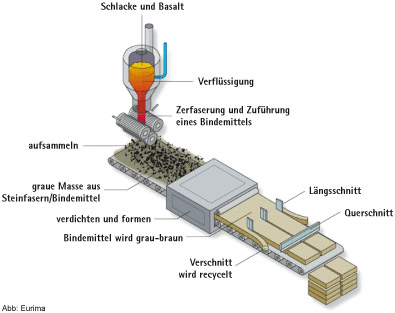
The logic explanation should be the old story that cellular glass is much more expensive but that is even hard to understand. Mineral fibers are formed after heating raw materials (basalt, waste) at 1600°C and another 200°C step for the binder. The above GLAPOR PG900.2 is manufactured by foaming ground waste glass with glycerin at 800°C. After correction for the thermal conductivity (thicker layer), both should have a comparable price.

Mineral wool production

GLAPOR cellular glass has indeed today a comparable price thanks to the introduction of new technologies in the old world of cellular glass. And indeed, the thermal insulation market becomes aware of the new opportunities resulting in a booming market.

On the coupling term in the thermal conductivity

logo_smallThe thermal conductivity of thermal insulation should be the sum of the following transport mechanisms:

  • conduction through the solid
  • radiation
  • conduction through the gas (collisons between molecules in a brownian transport)
  • a coupling term between the solid and gas conduction

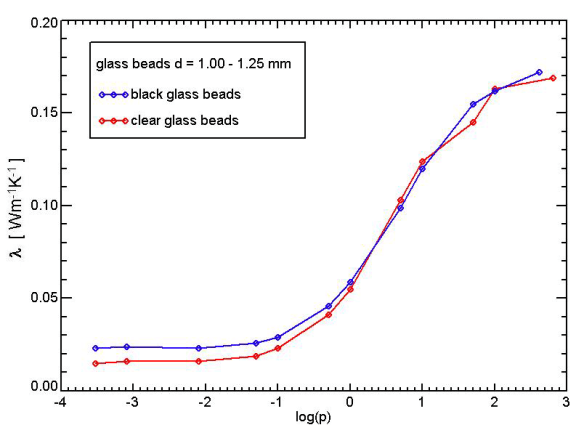
This mysterious coupling term was needed to “explain” why the thermal conductivity drops more than the thermal conductivity of the gas after evacuation to a good vacuum (10e-1torr)

The coupling term was observed in four cases:

In all these cases, the coupling term was needed to explain the decrease of thermal conductivity due to evacuation. In the case of glass beads, the decrease is about 6 times the thermal conductivity of air. A bed of glass beads can be very permeable and natural convection is not excluded as explanation. However, in the other cases, natural convection is not obvious.

glass beads

The coupling term is explained as a kind of short circuit like shown in the following graph.

coupling

There should be an extra heat transport system in the gas (on top of the normal gas conduction) in the neighbourhoud of the point contact, shown by the blue arrows. Today, nobody seems to be able to explain the nature of this transport. But I know a bright physicist at the KU Leuven in Belgium and I surely will consult him about this.

Richard_Feynman_NobelAccording to Richard Feynman, turbulence is the most important unsolved problem of classical physics and maybe the coupling term will be the second most.


Living and floating on cellular glass

logo_smallIn a previous post, I was already dreaming about pontons made of cellular glass. But dreams can become  true in Aarhus, which will be the European capital of culture in 2017.

Aarhus_docklands_by_night

In this city, a project Cirkelø is planned. It contains a series of homes on water with a cellular glass ponton.

Cirkelø

Denmark is a country with a profound ecologic culture, where cellular glass becomes every day more and more popular.


Thermafiber Mineral Wool Insulation vs. Spray Polyurethane Foam Insulation in Pre-Cast Perimeter Fire Barrier Conditions

logo_smallWe found a public document of Owens Corning, which contains a comparison between PUR foam and mineral wool. I guess that this kind of comparisons are not allowed in Europe and that is a pity. We can expect that the document will not be negative about mineral wool like the following citation shows:

Compare Thermafiber Mineral Wool to Spray Foam Insulation (Closed Cell). Compare the efficiency. Compare fire protection. Compare aesthetics. Compare prices, too. Whatever your criteria, the more you compare, the more benefits you’ll find with Thermafiber.

Non-combustibility, fire resistance and condensation possibilities are the main advantages of mineral wool. The same arguments could be used for cellular glass.

A lot problems with PUR, PIR, EPS, XPS, …. can be solved by combining them in a sandwich with cellular glass. GLAPOR cellular glass is working together with large manufacturers in that perspective.

Thermafiber

Copied from the above document


Improved inside air with cellular glass

logo_smallThe trend to passive housing forced people to build an air tight envelope. The importance of this tightness is already shown in a previous post. But the consequence of air tightness is that we have to check the quality of the indoor air (IAQ).

The first method to improve the IAQ is to avoid emitting dangerous gases and particles. No smoking inside  is trivial but also diluting by ventilation with (clean) outside air is a must. Ventilation standards in Belgium (always inspired by Europe) give as general rule 3.6m³/h  per m² floor surface or 720m³/h for a 200m² house (10×10 with 1 stock).

Heating 720m³/h air from 0°C to 20°C takes about 4800W. This is unacceptable for passive housing and for that reason heat recovery ventilation is needed with a heat exchanger, which can have an efficiency larger than 85% in case a cellular one is used.

800px-Heat_exchanger

Passive housing means a huge thermal insulation (40cm thickness and more) and an expensive (cellular) heat exchanger for the necessary ventilation with high efficiency recuperation of the heat. The large thicknesses of the thermal insulation are in conflict with elegant architecture and increase largely the building cost besides thermal insulation.

On the other hand, ventilation through permeable thermal insulation with an under pressure (generated by a fan) is a another way. The heat, leaking away in the insulation is used to heat up the ventilation air. The exhaust of the fan has an heat exchanger to recuperate the heat, reintroduced in the envelope.

In case of a windless day, an extreme small U-value can be obtained. In case of an efficient heat exchanger, the heating power will be negligible, reaching the lowest passive values possible. On the other hand, on a windy day, a large under pressure must be generated to avoid that air is going outward through he insulation.

The last system (ventilation through permeable insulation) guarantees a very high IAQ (Indoor Air Quality) and a perfect ventilation of the structure, avoiding any problems associated with humidity. In case open celled cellular glass is used, we obtain a system with an extreme long lifetime. This system can withstand extreme low temperatures with negligible power on a windless day, but is more sensitive to wind.

pool

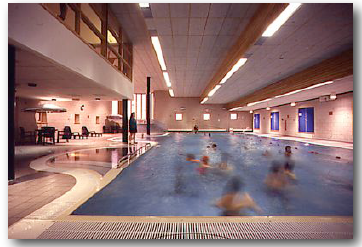
Swimming pool ventilated through the thermal insulation

Open cellular glass was already discussed in this blog with recipes based on CRT glass and Manganese oxide. That seems to be a good starting point. I guess that this application, dynamic thermal insulation, will induce a lot of competition with impermeable insulation if open celled cellular glass will be available soon at prices around 150€/m³.

Dynamic thermal insulation with cellular glass

logo_smallDynamic thermal insulation allows passive house (dynamic) U-values with moderate thickness and standard thermal conductivities below 0.050 W/mK. It is a real proof that the race to the best thermal conductivity is useless for buildings.

The principle is already used in many buildings like demonstrated in this dynamic insulation paper of the Gaia group. These architects construct buildings with clean air as priority.

In short, a small under pressure (5Pa) is created in the space surrounded by the insulation envelope and this induces a small air flow through the permeable insulation. The air, used for ventilation is heated with the heat, leaking away through the insulation. In fact, the thermal insulation acts as large heat exchanger. Passive U-values smaller than 0.1 can be obtained with only 10 cm insulation of 0.040 W/mK. The under pressure is generated by a fan and the heat of the sucked air is stripped with a another heat exchanger in the exhaust of the fan.dynamic.png

Passive housing with moderate thicknesses and totally no building up of moisture (which is easily achieved in passive housing, as  demonstrated at the KU Leuven, Belgium) is possible due to the perfect ventilation.

The key is to find a material, which has the right permeability and thermal conductivity. This material should by preference be fiber free and should also allow to build a mechanically stable envelope free from gaps. Indeed, all the air should flow through the thermal insulation.  On top of that, it should have a lifetime, exceeding the one of the building.

We think that open celled cellular glass would be an option. This can be done with recycled glass and some foaming agents, which induce crystallization. GLAPOR cellular glass is able to produce 3 x 1.5m boards, which should be ideal to reduce the amount of joints as much as possible. It is also important that foaming agents without any doubt about health are used due to the intimate contact of the ventilation air with the internal foamed glass surface.