 Up to now, I was convinced that waste water cleaning happens outside in open air. But it seems that the new technology is installed inside. According to Johan Allegaert, professional in waste water cleaning, there are several reasons to work in this way:
- Temperature control of the water cleaning process
- Absolute control of odours
- Elimination of a risk to have an animal cadaver in the water during cleaning
Such a building contains a huge humidity and as a consequence, the architect has to choose for cellular glass, being absolutely vapour tight.The project description is given here under:
 Obsolete technology and insufficient capacity of the existing wastewater treatment plant are two main reasons for which the Jesenice councillors decided to build a new wastewater treatment plant. On Monday 6 October 2008, work on this project was open at a ceremony attended by Petr Bendl, Governor of the Central Bohemian region.
The new wastewater treatment plant will be located in one roofed L-shaped structure sized 44.5 x 27 metres. The whole technology will be concentrated inside the building, from rough pre-cleaning to the rain tank, biological lines and final sedimentation tanks upto sludge handling and disposal. “The project also includes roads, fencing, tube and cable lines and also modification of the existing discharging structure“, said Zdeněk Pánek, Mayor of Jesenice, at the ceremony. The new wastewater treatment plant will have a capacity of 7,500 EO (i.e. equivalent inhabitants) and will sufficiently cover not only the current needs but also future projected development of the village.
Preparatory construction work was begun in line with the schedule in September 2009. “According to the contract for work, the deadline for completion of the project is June 2010“, said Jaroslav Novotný, Vice-Chairman of the Board of Directors of VCES a.s., the company selected as contractor of the project. “In the course of construction, we will have to come to terms with a small work area, as well as with difficult geological conditions“, concluded Novotný. The cost of the new wastewater treatment plant in Jesenice will total CZK 78.9 milion (without VAT), the design was drafted by HW PROJEKT, s.r.o.
The project is co-financed by Jesenice, the Ministry of Agriculture and the Central Bohemian region. “The Ministry of Agriculture will cover 45% of the total cost with a subsidy and, at the same time, provide a credit with favourable terms to cover 35% of the total cost. The Central Bohemian region will contribute 10%“, added Pánek.
 Jesenice and the neighbouring villages have a permanent population of 5,500. However, the real number of inhabitants can be over 6,500, because people usually do not change their permanent residence due to administrative requirements connected with change of the seat of the firm. For the following period, Jesenice is preparing to invest even more in the environment. Villages Horní Jirčany and Osnice will get a new water supply and sewerage system worth over CZK 60 mililon and a new waste collection yard; green areas in the village will be substantially expanded, too.
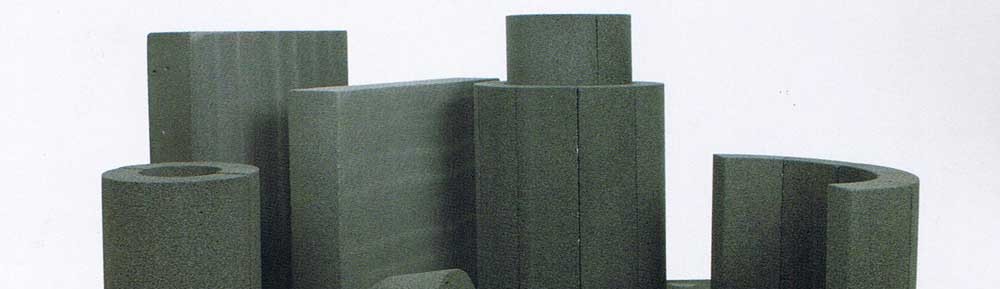
 For ecologic and economic reasons, the customer has chosen for (thicker) GLAPOR cellular glass from Germany. GLAPOR boards are delivered with 80 x 60 cm dimensions, reducing labour cost.

 To accomplish this mission, the AISB, in collaboration with
  This fantastic project subscribes the famous American values of life: a multinational environment for children, built with absolute safe and ecologic materials.





 A flat roof is always a major risk for major losses due to storm (wind) and fire risks during maintenance. For that reason, FM developed a
  A- Occupational exposures to oxidized bitumens and their emissions during roofing The body of available data from cancer studies in humans points to an association between exposures to oxidized bitumens during roofing and lung cancer and tumours in the upper aerodigestive tract. In support of these findings, extracts and fume condensates of oxidized bitumens, which are used primarily in roofing applications, showed sufficient evidence of carcinogenicity in experimental animals. Taking these data together, the Working Group evaluated occupational exposures to oxidized bitumens and their emissions during roofing as “probably carcinogenic to humans” (Group 2A).
 Bitumen burns and is EUROCLASS F. It can be improved with fire retarders but these improved bitumens are rather hard to find.
 Bitumen has IARC classification 1 and has beyond any doubt cancerogenic risks, especially during installation when hot. This risk is reduced when working with cold bituminous products, like
  And suddenly was there
 We expect a time where a prefab cellular glass house will be free of charge, construction with guarantee included. The cellular glass producer will be paid by the ones who have to dump mineral wool thermal insulation. In fact, the cellular glass house will be the final grave where converted mineral wool will be “dumped”. All the used energy (thanks to the special recipe) will be clean electricity, produced by wind, solar and the combustion of PIR, XPS and EPS. Indeed, waste (glass) is gold … if converted into cellular glass.
 In Norway, a very creative solution for a cellular glass house without frame or bricks was developed based on cellular glass:
 Fire brigade officers are very reluctant to give a permission for public buildings (especially schools) when combustible thermal insulation is used. Without that permission, the building is not ready (unfit to use) and the contractor do not receive the last part of the money, which is usually more or less his margin. As a consequence, even contractors in Romania are reluctant to use combustible thermal insulation. In case a certain rigidity is needed, they choose cellular glass, even for sloped roofs. The picture on the left is more than enough reason to avoid combustible material. It shows a lot of people in panic in a dead run due the fire in the nightclub.


 BELGLAS BV