Improving molds for glass foaming

Glass can be foamed in a mold or on belt (continuous foaming). A mold is typically madelogo_small from stainless steel because foaming temperatures may be up to 950°C. Heating transport at these temperatures is primary by radiation while stainless steel acts as a mirror for radiation, it has a low emissivity. On top of that, glass at 800°C has a tendency to stick on steel. This sticking can be eliminated by a coating based on kaolin or another fine refractory oxide but remains always critical. In case of even minor sticking, stripping the block from the mold may become difficult.
BELGLASCZ suggests to perform an experiment with a mold coated at the inside and outside with EMISSHIELD. This ceramic coating is nanotechnology with as primary function to increase the emissivity to 0.95 . It is available for refractory ceramics, steels and aluminium. The glass world knows this product today for the coating of the superstructure in glass melting furnaces to improve the energy efficiency. CNUD EFCO uses this product on stainless steel to improve the efficiency of the heat exchangers (patented) and to lengthen the life time of a NiCr heating coil (patented). An EMISSHIELD coated heat exchanger absorbs the radiated heat much better while the coating also protects against corrosion like published in Innovating flat glass lehrs.
An EMISSHIELD coated mold can be considered as transparent for heat and this should allow to work with a lower furnace temperature and more homogeneous heating. In this case, the flue gases will be colder and less energy will be consumed. We also expect that coating protects against the furnace atmosphere lengthening the life time of the steel. If also the walls of the foaming furnace are coated, we can expect an energy saving of minimum 5% next to a longer life time of the mold due a more homogeneous heating and protection against the furnace atmosphere. In an experiment, CNUD EFCO showed that float glass does not stick on coated heating wire at 1000°C and it may be expected that sticking of a glass foam on steel will be less likely. CNUD EFCO has all the equipment to construct and coat molds for the foaming of glass. More information can be obtained at hans.strauven@cnudefco.com.

A well documented paper about foamed glass gravel

Cellular Glass Aggregate Serving as Thermal Insulation and a Drainage Layer is a nice logo_small
article written by Andreas Zegowitz. It handles generally about the production, use and opportunities of foamed glass gravel (or cellular glass aggregate).The paper is rather objective because it mentions the leaching out of certain heavy metals,

Factory-made aggregates of cellular glass with a typical lump size of 10 to 75 mm represent a new type of thermal insulation with drainage properties being applied in Switzerland, Germany, and other European countries. Cellular glass aggregates are used as insulating filling material at the perimeter of buildings as well as under load-bearing foundations. They can serve as insulation drainage layers of garden roofs. The insulation material is manufactured from recycled glass and mineral additives in a thermal process. The aggregates form when slabs of cellular glass crack while cooling down. In order to obtain the required hygrothermal properties, the manufacturing process must be carefully controlled. Despite its low density of approximately 120 to 250 kg/m³, cellular glass aggregate has a high pressure resistance, absorbs hardly any water, and is fireproof. The expected service life is at least 50 years. Since its first appearance on the market, this insulation material has been thoroughly tested and the effect of water clinging
to the aggregate has been investigated in the laboratory. To confirm the assumptions, the average moisture content and the thermal conductivity of the material in service was also determined by material sampling on existing buildings. This paper gives an overview of the different tests that must be performed in order to obtain a German and European Technical Approval. It summarizes the aggregate properties of different manufacturers and reports the practical experience gained by in-situ investigations.

Living on water with cellular glass

logo_smallMost people prefer to live on stable ground but other are born with sea legs and only sleep well on water. Personally, I remember I had the best sleep of my life on a cruise ship. Living spacely on a permanent place on water involves a floating home with a ponton. Therefore, we need to build a floating structure like shown hereunder.

The-Floating-House-Structure

This floating structure can be made with steel or other tubes but closed cell cellular glass could also be used. Indeed, cellular glass can have density below 120 kg/m³ and a full house can be taken with only 50 cm thickness.

On top of that, the floor has to be thermally insulated from the cold water. With a cellular glass ponton, this function is automatically included.

GLAPOR® cellular glass can be used. They are able to deliver dimensions up to 3.2m by 1.2m and 14 cm thickness. The different plates can be glued together and covered with a mortar based on natural hydraulic lime, which remains hard under and above water. This cellular glass material is today available for 200€/m³ or about 10000€ for a safe insulating ponton of 10x10m.

Living relaxed and ecological on water, enjoying nature at your feets is another possible application of cellular glass.

The mechanical stability of cellular structures

logo_smallIn a previous post we already reported about acoustic emission experiments on cellular glass. The experiments are described in a public scientific paper.  This paper was in the mean time 96 times cited, which is a nice result. Indeed, people found the same phenomena in the crumbling of paper, in bundles of glass fibres, in theoretical simulations and in earthquakes. The citations can be found here with GOOGLE SCHOLAR. This service is invented to satisfy the ego of scientists, also mine. Like can be observed, even in 2014 after more than 15 years, the paper is still cited and this year, an important paper was found by the system.

The paper describes tensile experiments monitored with acoustic emission on polyurethane foams. They found the following similarities:

  • power law distribution for the magnitudes of the events
  • Power law distribution for the time between events
  • almost no dependence on the density

The second power law is not present at lower temperatures, which is unexpected. At lower temperature where the foam is brittle, I would expect even more similarities.

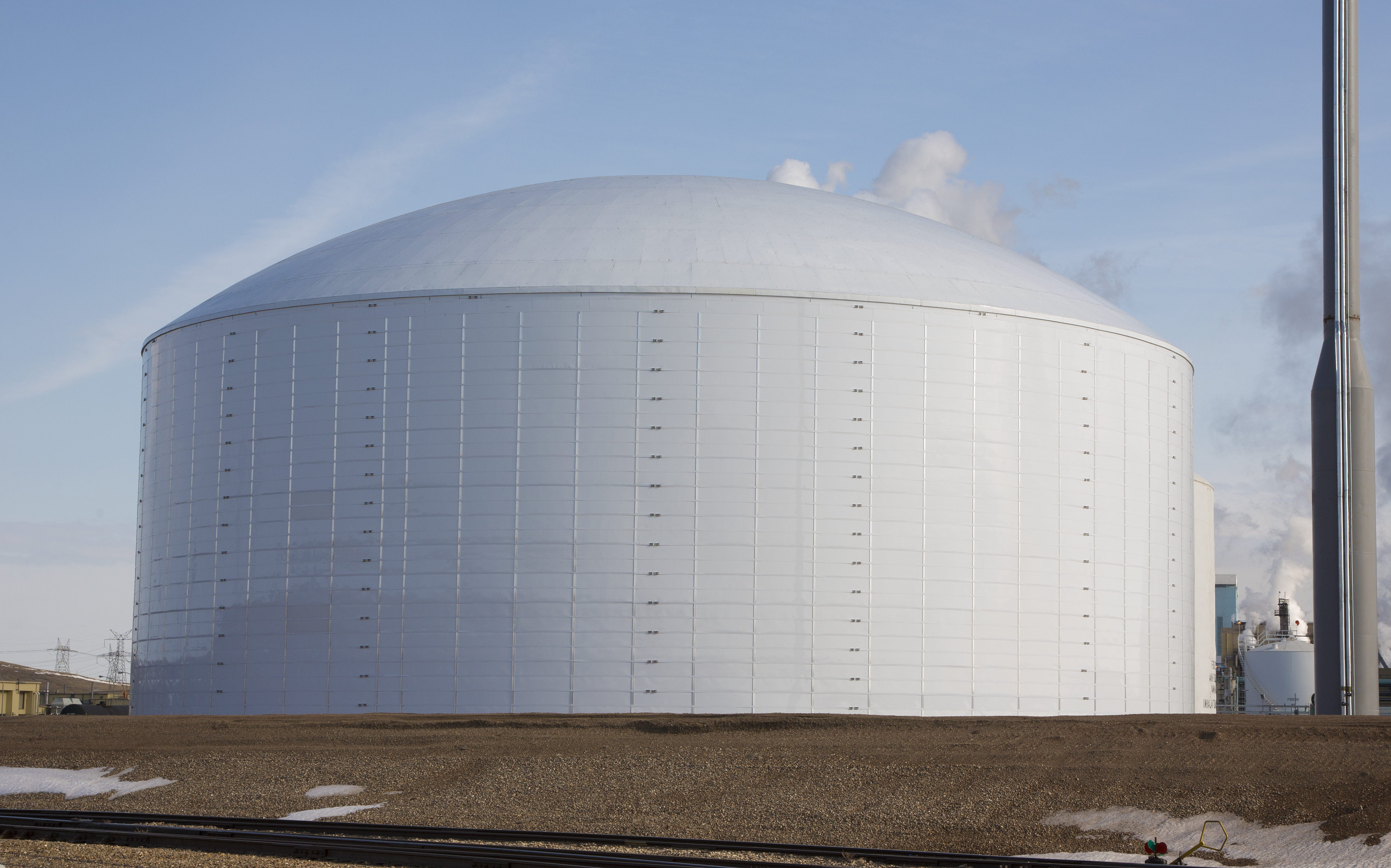
But the paper focuses on the fact that cellular structures fail in a different way than the base material, explaining why a seriously reduced safety factor can be used. In cellular glass, this is an important property when we think about cellular glass under buildings, under large tanks with liquid gasdgc new anhydrous ammonia tank c5648-00051 and the intelligent GLAPOR® solution under buildings with boards and gravel. PeriBo RDS-SD GLAPOR PICT Button

Building with foamed glass gravel and boards

logo_smallFor years and years, I worked on the annealing of cellular glass to avoid breakage and producing foamed glass gravel is totally the opposite. But since 15 months, I daily watch the production of gravel and the product started to become very interesting to me. Indeed, in floor insulation is vapor tightness not an issue and the much more expensive horizontal boards are not necessary. Foamed glass gravel is also a durable solution for floor insulation and a nice method to use waste glass which became difficult to reuse as bottles or flat glass. On top of that, the waste glass can be foamed with healthy foaming agents, used in any house man or wife. The product does not absorb water, is 100% ecological and healthy and has a very long life time, compared to EPS and XPS. The last property is much more important under the floor (impossible to replace) than on a roof. Many companies are producing this material, which became rather cheap due to the market competition.

GLAPOR® is the only company, who is producing gravel and boards and has developed the best of two worlds. Indeed, in the GLAPOR® solution, the gravel is enclosed between walls, built from GLAPOR® cellular glass boards. In this way, rain water, falling aside the house, can not flow into the gravel, which is protected by the boards. In this way, the system has a perfect frost protection and other advantages. A schematic drawing and picture explain the above. The GLAPOR® mantra   “Fascination by glass bubbles” is well applied in this case.

Today, the gravel is sold at about 40€/m³ and the cellular glass boards at 150€/m³, making this system really competitive with the classic EPS and XPS solutions.

PeriBo RDS-SD GLAPOR PICT Button

Gravel between upstanding boards

perimeter

Actual building site with gravel between boards

The revelation of GLASSTEC 2014

logo_smallEvery two years, there is the glass technology fair in Düsseldorf20141022_110049. It is not my favorite exercise, certainly in times when float glass industry is suffering. But I was surprised by the many presentations about cellular glass, like for example Francke. They are working together with Glamaco Maschinenbau, a company which was working for the old Coriglas plant in Schmiedefeld, Germany. But another demonstration was astonishing. Indeed, Lfg or Lehr for Glass, who has built the plant for STES in Vladimir in Russia, had a nice 3D model of a production line, together with a movie of the running line and produced cellular glass. The produced cellular glass had extremely fine cells for such a light block. The first line was successfully started and the second line will be running in two weeks, together producing about 100000m³. Oleg Gerberv.!, owner of Lfg, was very proud he did the job with ordinary robots, who are very flexible to program and easy to replace in case of failure.  Oleg, a real Ukrainian, was working a long time for Ernst Pennekamp GmbH&Co, a glass lehr constructor and he decided to make the big jump. He found the capital and he did it, I have a large respect for this self made man. Some time ago, he asked my opinion about his robot, running in a pilot plant in Wuppertal, Germany. I still remember that visit, it was the first time I saw a white powder to be foamed to a nice black foam in an electric furnace under air. I realized I made an error 7 years ago, when I was thinking that cellular glass was at the end. Indeed, we are at the beginning of new challenging wave.

It was a long time very quite in the cellular glass business but the last seven years, a huge extra production capacity for boards was built in Europe, China and Russia. STES should sell their material NEOPORM about 40% cheaper than other manufacturers for the same quality and still with good profits. Next to that, we have at least 1000000 m³ foamed glass gravel, used for floor thermal insulation. STESThis is the start of important price drops, making cellular glass accessible to everybody, who likes to behave ecological and wanted to avoid foams with a rather short life time. Andrei from STES and Oleg from LFG are doing the same as for example Michael O’Leary from Ryan Air for the aviation industry. Thanks to him and other price breakers, ordinary people can take the air plane while in the past, it was reserved for the happy few without any good reason. Thanks Andrei and Oleg, you both are great guys.

Investing in a cellular glass plant, profitable or not?

logo_smallFrequently this question comes on the table. A good point to start is a study  for the United Kingdom. This study is looking for a profitable destination of waste glass and in that perpective, they make this study about foamed glass. The study is made in 2003 but became more relevant with the higher demand for thermal insulation. Why should you read this study?

  1. It gives a nice description of different production methods.
  2. The different outputs of foamed glass are shown: boards, gravel, granules, …
  3. The situation of waste glass in the UK is well described
  4. The production of more intelligent cellular glass is mentioned like for example the acoustic absorber REAPOR.
  5.  It is also demonstrated that the investment cost is too large for a small production plant.

The last point is the reason why starting a production plant is so difficult today. If there is no large market immediately available, you need to find cheap energy, cheap waste glass and cheap labor to start up a small plant. I doubt that today Europe is the place to be.

Grinding, an empirical science

logo_smallThe best cellular glass is produced with the powder method. A fine glass powder is produced and a foaming agent is mixed with the glass, the resulting powder is allowed to sinter with incorporation of the foaming agent and further foamed by increasing the temperature. It is not a surprise that there could be a relation between the obtained cell structure and the way the glass was ground and the foaming agent mixed.

In that perspective, we advice to start with an introduction on Wikipedia, a fantastic site. The software, which drives Wikipedia is open source and a very good tool to create your own internal company documentation system under Linux.

But the more interested reader will have fun with a paper, which demonstrates a lot of practical issues with as for example Steatite grinding media. The paper is concise and is also a good introduction to the way the glass is ground in ball mills and other instruments.

The more academic reader will find this text book very enjoyable. It gives  already a good trial to describe the kinetics of the grinding and gives a calculation of the absorbed power of a ball mill.

The reader, who can find the time and energy to absorb the above is however not ready to select the right grinding tool for his foaming process. Indeed, much more equipment than ball mills were developed during the last years and some of them have to be incorporated in the glass foaming plants.

Another book for your library: Cellular Solids, Structure and Properties

logo_smallThis book (ISBN: 9780521499118) at a 2nd edition is written by Lorna J. GibsonMassachusetts Institute of Technology and Michael F. Ashby from the University of CambridgeThe last author is famous by the following statement:

When modern man builds large load-bearing structures, he uses dense solids; steel, concrete, glass.When nature does the same, she generally uses cellular materials; wood, bone, coral. There must be good reasons for it.

The book contains much more than thermal insulation and gives a theoretical foundation for the elastic properties of foams. These properties are used in cellular glass engineering and process calculation.

I learned that the stress relaxation behavior does not depend on the geometry / density of the cell structure but solely on the basic material, glass in this case. But the Poisson ratio depends completely on the geometry and is 0.33 for an open cell structure with regular round cells, while it is 0.28 for solid glass.

Both facts are important for the calculation of the annealing temperature curve for cellular glass, already one reason to buy this excellent book.

CellularSolidsBook

Waste glass conversion to cellular glass was already hot in 1977

logo_smallAlmost 37 years ago, a report about the production of foam glass from waste glass was published. This report describes three foaming systems:

  • After water absorption by the waste glass powder
  • After mixing the waste glass powder with carbon (black)
  • After mixing the waste glass with milled limestone

The report learns that up to 6% water can be absorbed in waste glass by using an autoclave and the addition of NaOH in the water. This glass can be foamed but only small pellets are possible. The glass with 6% water has a low viscosity and during reheating, we have steam as the driving gas for the foaming. When the water has left the glass, the viscosity increases and the foam freezes.

But also carbon black can be mixed to the waste glass. In this case, also bentonite is added to able to form green pieces. This clay also seems to reduce the water absorption of the foam. Between the carbon blacks we find exotic ones and the ASTM defined ones, produced mainly in China. The paper assumes that the absorbed gas in the carbon is inducing the foaming, while we know that the sulfate in the glass is also important (Demidovich p12). Last but not least, the importance of a reducing atmosphere is mentioned.

CaCO3 was also mixed with the glass together with again bentonite. It was found that milled limestone gives the best results and larger dimensions are possible. A thermal conductivity as low as 0.052 W/mK is reported with this recipe at 160 kg/m³. Controlling temperature and foaming agent allows to foam a closed cell structure.

The report is in favor for the carbon black method but gives only thermal conductivity measurements for the CaCO3 system. Personally, I think that this last system deserves more attention.