The first report about carbon as a foaming agent for cellular glass

logo_smallPatent US3666506 with inventers JH Cowan and D. Rostoker from Corning Glass Works  have developed cellular glass from rocks in 1969. For the first time, carbon is mentioned as foaming agent. The patent has further other interesting information: they mention

  • already the large production cost of cellular glass, foamed from a special glass composition in closed molds.
  • the need for a reducing atmosphere and for that reason a closed mold.
  • batch materials like clay, vulcanic ash, flux, cellulating agent and maximum 800°C
  • organic foaming agents as carbon source instead of carbon black or graphite are preferred
  • the flux added to give the proper visocity to the clay (rocks) with  sodium silicate (water glass) as the favorite one
  • a table with working and not working foaming agents
  • the need for 10% particles smaller than 5 micron in the clay
  • the use of a ball mill to mix and grind
  • producing pellets to avoids molds
  • 30 foaming recipes
  • densities between 150 and 650 kg/m³

The drive for this patent was to avoid the melting of a glass and the use of molds. Today, GLAPOR has replaced the clay by recycled bottles and the molds by a continuous foaming system. And as a consequence, very competitive prices around 200€/m³ are possible for large quantities. Cowan and Rostoker, both eminent scientists with a view should be satisfied.

The declared thermal conductivity

logo_smallToday, thermal insulation producers in Europe have to declare the thermal conductivity in a special format. This format, the declared value,  motivates the producers to

  • stabilizing their production and in that way the thermal conductivity
  • perform more measurements up to 1000 in three months

The procedure to calculate the declared value is described in the standard EN 13162 : 2008 and the measurement method in the standard EN12667, all part of the general standard EN13167. This standards system became so complicated that companies have today to hire a VP Standards. But the fact that ordinary users, like me, have to spend a lot of money to buy these standards in order to know the rules is a shame.

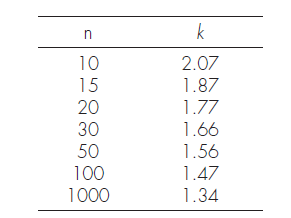
For the declared value calculation, I found a good public document. It explains how to calculate the declared thermal conductivity with the average value, the standard deviation and a factor depending on the number of measurements. This factor is given in the following table and is the only one thing you need from the standard.

declared value table

Master Thesis: Production and characterization of foam glass from container glass waste

logo_smallThis master thesis, written by Dina Mohamed Abdel Alim at “The American University in Cairo, The School of Sciences and Engineering” is a nice introduction to cellular glass. I copy the abstract hereunder:

Foam glass with excellent properties was produced from container glass waste. The
processing technique depended on the powder sintering approach using sodium
silicate solution as a foaming agent. The morphology, density and compressive
strength were studied in relation to different processing parameters: sintering
temperature, amount of foaming agent, soaking time, powder particle size and glass
powder color. Foam glass was sintered in the range (750-900C) for 30 minutes with
the incorporation of 12 and 19 wt. % sodium silicate solution. At lower sintering
temperature (750-800C), the foam has denser structure (bulk density ranged from
0.37-0.61 g/cm³) along with high compressive strength (ranged from 2.29-18.68
MPa). As the sintering temperature increased, higher levels of porosity were achieved.
At 850C with 12 wt. % sodium silicate solution, lightweight (bulk density = 0.25
g/cm³), highly porous (% of porosity = 90 %) foam glass was achieved. It had
relatively high compressive strength (1.62 MPa), compared to other insulating foams,
along with low thermal conductivity (0.078 W/mK) and the most homogeneous pore
morphology. Significant change in foam glass properties took place with changing the
amount of foaming agent. As the amount of foaming agent increased, the density of
the foam decreased till it reached a minimum of (0.25 g/cm³) that corresponded to 12
wt. % sodium silicate solution. Further addition of foaming agent caused the density
to re-increase and the pore morphology to coarsen. Sintering foam for different
soaking times had a slight effect on changing the foam glass properties. The
morphology of all the foam glass produced at different soaking times was
comparatively homogeneous. The compressive strength of the produced foam was
relatively high (1.6 MPa at 40 min and 3.13 MPa at 10 min). The powder particle size
had a major effect on foam glass properties. As the particle size increased, the bulk
density of the the foam increased and the morphology became less homogenuous.
Increasing the sintering temperature for the larger particle size did not succeed in
increasing the foam structure homogeneity. The glass color also had an effect on the
foam glass properties. The properties and the morphology of the green and brown
glass samples were approximately the same (bulk density = 0.38, 0.37 MPa and
compressive strength = 2.05, 1.97 MPa respectively). However, they differed from the
morphology and properties of the white glass (bulk density = 0.25 g/cm³) and
compressive strength = 1.62 MPa). The specific compressive strength of the white
glass foam (6.48*10-3 MPa m³/Kg) was higher than that of green and brown glass
(5.39*10-3, 5.32*10-3 MPa m³/Kg respectively). EDX analysis was performed for the
white, green and brown powder. It showed that they had more or less the same
compositions (except the presence of chromium element in green glass and titanium in
brown glass which are coloring additives). They had the same main elements but with
different weight percentages.
The optimum processing parameters for producing foam glass for thermal
insulation was to use sintering temperature 850 C, amount of foaming agent 12 wt.
%, soaking time 30 min and glass powder particle size 75 μm.

I don´t like to see a specific compressive strength because this property does not depend linear on the density. But further, we observe

  • a good introduction to glass
  • a nice transition to waste glass and its recycling problems and further to
  • to cellular glass: current production method and applications as thermal insulation
  • and a benchmarking between alternative thermal insulation materials with focus on life time
  • applications in building and industrial insulations and alternative applications
  • the use of foamed glass gravel
  • theoretical study of cellular structures
  • open and closed cell recipes
  • sodium silicate as a foaming agent
  • thermal analysis of this recipe
  • very interesting thermal imaging of the foaming
  • annealing of the foam (without mentioning the thickness)
  • different glass compositions to foam
  • mechanical properties
  • designed experiments to investigate the different parameters
  • the effect of the color of the cullet on the foam quality

This master thesis could also have a been a PhD thesis, it is really a nice piece of work.

The world interest for cellular glass

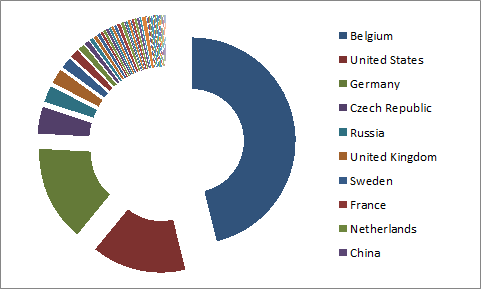
logo_smallThis website is active since February 2014 and was about 9 months not active due to unforeseen events. In the mean time, we have restarted. The statistics about the countries connected to the clicks are a way to investigate the interest for cellular glass.

If we skip the countries with already an important production capacity (Belgium, Germany, Czech Republic, China and the United States), we can guess where the next cellular glass plant will be located.  We also observed that our customer GLAPOR received 861 clicks.

Clicks20142015

Clickstext20142015


Ecology benchmarking extended with GLAPOR cellular glass

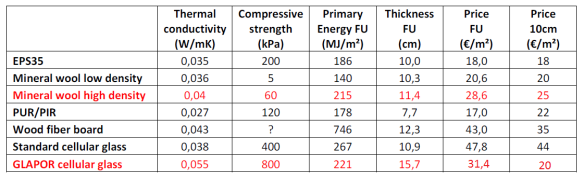
logo_smallGLAPOR cellular glass is foamed from recycled glass without any remelting. As a consequence, the production equipment does not need a glass melter. In this way, the OPEX and CAPEX are seriously reduced, which allows to bring this material on the market at an interesting price. The use of a melting furnace should allow to improve the thermal conductivity of GLAPOR cellular glass with 20% for the same compressive strength but almost doubles the primary energy consumption. In case the thickness is not limited, GLAPOR cellular glass is an interesting economic and ecologic option, as shown in the following table.

ecololgy_table

The table is based on two public reports already mentioned in previous posts about mineral wool and an ecology study. FU is a functional unit, which is equivalent with 10cm EPS35 or a thermal resistance of 2.857 m².K/W. The data for GLAPOR cellular glass were communicated by GLAPOR, while the high density mineral wool data for the primary energy are extrapolated from 105 to 145 kg/m³ density.

In case non-combustibility, a higher compressive strength, water and vapor tightness are important (for example flat roof), GLAPOR cellular glass is very a good ecologic and economic option if a larger thickness can be installed.

PhD thesis about CRT glass foaming by Francois Mear

logo_smallFrance has a server where PhD students are invited to upload their thesis. I found an interesting one about the foaming of CRT (cathode ray tubes), already mentioned in a previous post. But in that post, only glass without PbO was foamed.

In the PhD-thesis of this post (written in French by Francois Mear), also PbO containing glass is considered. The following topics are described:

  • Glass composition of the different CRT’s
  • Description of different and less known glass foaming methods
    • Saint-Gobain method based on sulfate
    • Saint Gobain – Isover method with a nitrate glasses
    • CERNIX with AlN foaming agent
    • MISAPOR process with SiC
  • Description of foaming tests with SiC and TiN
  • Study of the obtained foams
  • Study of the foaming kinetics and formation of Pb-metal

In my opinion, the presence of Pb-metal in the foam will never be accepted. This Pb-metal is the result of the reduction of the PbO by SiC and/or TiN. Only foaming methods, based on decomposition (CaCO3) can be a candidate to recycle this glass as cellular glass.


Changes in mineral wool insulation due to humidity penetration

logo_smallThe AACHENER INSTITUT FÜR BAUSCHADENSFORSCHUNG UND ANGEWANDTE BAUPHYSIK published a report about warm flat roofs, insulated with mineral wool. The report describes a few cases, where humidity penetration into the mineral wool changed the properties of the mineral wool. I copied a few graphs from this public report into this post.

thermal conductivity versus humidity

It is well known that humidity increases the thermal conductivity of the mineral wool in a distinct way from 0.040 W/mK up to 0.070 W/mK. 

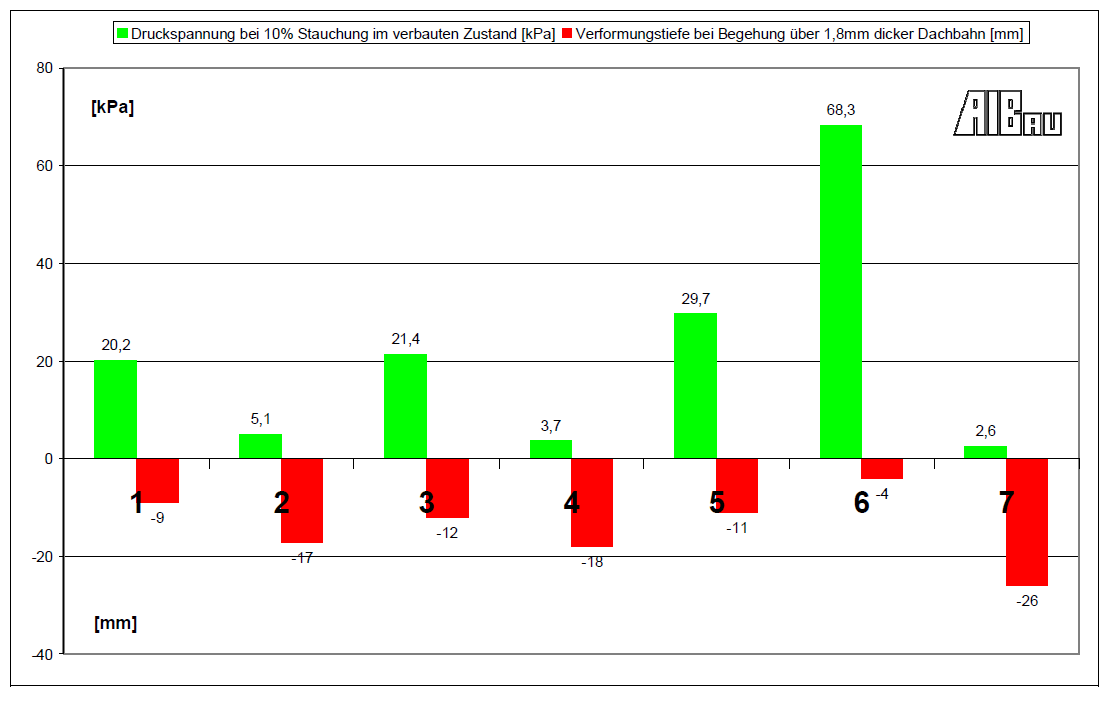
mineral wool compressive strengthBut it is less known that this humidity also decreases the compressive strength of mineral wool, probably by damaging the binder.

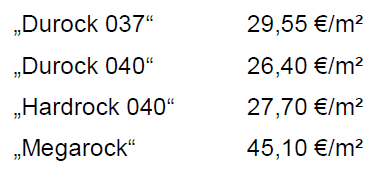
mineral wool priceThe report gives also 2011 prices for mineral wool with a higher compressive strength.

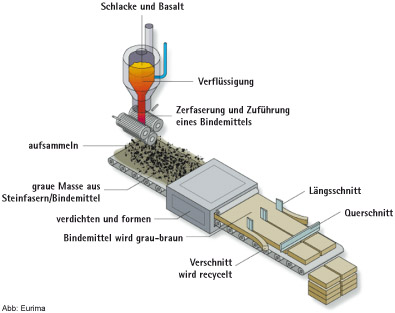
Mineral wool productionThese prices are not a surprise if we study the production of mineral wool. The production involves a melting at 1300°C before the fibers can be pulled and a binder can be added.

GLAPOR cellular glass involves only foaming of waste glass up to 800°C without adding binders later on.  The resulting cellular glass is absolutely water and vapour tight and has a much higher compressive strength (800kPa) with a higher thermal conductivity (0.055 W/mK). As a consequence, replacing 12cm mineral wool needs 16cm GLAPOR cellular glass, available at 32€/m² for larger quantities.

Given the absolute water and vapour tightness (and so a stable thermal conductivity and compressive strength) of GLAPOR cellular glass at a comparable price, cellular glass has to be considered in cases where a certain compressive strength  is needed or a risk of water penetration is present.

Foaming CRT glass: News from the Aalborg University in Danmark

logo_smallCathode ray tubes (CRT) were your screen in your old television but they are today replaced by LCD and other technologies. As a consequence, the last CRT´s are not recyceld during the production of new ones and are a problem today.
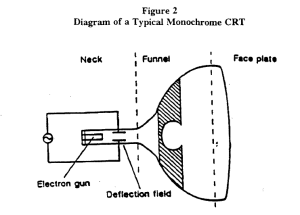
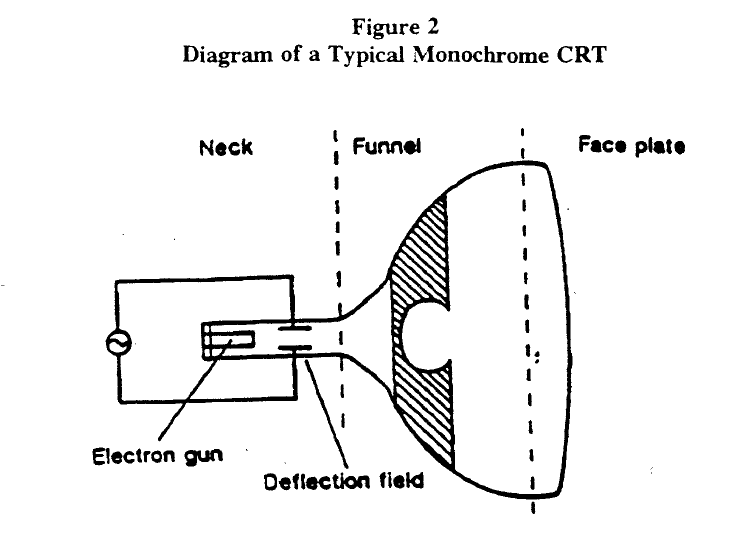
CRTThe major problem in recycling is the presence of PbO in the glass. This heavy metal was used to block the X-ray radiation, generated by the electrons bombarding the phosphor screen. I found a paper of 1999 and one of 2007, giving more details about the recycling of the glass and the quantities in the world. It seems that the funnel may contain up to 25% PbO while the panel / faceplate contains less Pb0 or is even free of this oxide. The university of Aalborg in Denmark converted the panel glass in cellular glass by developing a foaming system.

Two papers, one with focus on the recipe and one on the foaming behaviour were found.

The first one handles about foaming with carbon and MnO2, while the second one only uses MnO2 without any carbon. The panel glass is considered as lead free.

Abstract 1

We prepared low-density foam-glasses from cathode-ray-tube panel glass using carbon and MnO2 as the foaming agents.We investigated the influence of the carbon and MnO2 concentrations, the glass-powder preparation and the foaming conditions on the density and homogeneity of the pore structure and the dependence of the thermal conductivity on the foam density.The results show that the moderate foaming effect of the carbon is greatly improved by the addition of MnO2. A density as low as131kgm3 can beachieved with fine glass powder.The foam density has a slight dependence on the carbon and MnO2 concentrations, but it is mainly affected by the foaming temperature and the time.The thermal conductivity of the foam-glass samples is lower than that of commercial foam-glasses with the same density.The lowest value was determined to be 42 mW/mK for a foam-glass with a density of 131 kg/m3. A further improvement in the closed porosity could potentially decrease the thermal conductivity even further,and thus our approach has great potential in terms of a thermal insulation material.

Abstract 2

We prepare foam-glass from cathode ray tube (CRT) panels using MnO2 as foaming agent at different temperatures for various durations. The reduction of MnO2 to Mn2O3 leads to formation of O2 gas, and hence, causes initial foaming. The Mn2O3 particles dissolve into the glass melt and subsequently reduce, causing further formation of
O2 gas and foaming of the glass melt. Increasing the treatment temperature and time enhances foam expansion, Mn2O3 dissolution, and lowers the closed porosity. Once the foam reaches a percolated stage, the foam continues to grow. This is caused by nucleation of new bubbles and subsequent growth. We discuss evolution of pore
morphology in terms of pore number density, pore size and closed porosity. The thermal conductivity of the foam-glasses is linearly dependent on density. The heat transfer mechanismis revealed by comparing the experimental data with structural data and analytical models.We show that the effect of pore size, presence of crystal inclusions and degree of closed porosity do not affect the overall thermal conductivity.

Rasmus R. Petersen, Jakob Königa,and Yuanzheng Yu developed a foaming system for lead free CRT panel glass. Although this is really nice R&D, I doubt that their statement about the thermal conductivity is correct, while it is based on a measurement method, which is not generally accepted in the thermal insulation world. This particular method is used because it allows to work with small samples.

It is also important to repeat that the above foaming system is not a solution for the PbO glass parts like the CRT-funnel glass and older CRT-panel glass.
Patent studies: Glass product and method of manufacturing sponge-like glass & Nodulated cellular glass and method of forming

logo_smallUS patent 1945052 is generally considered to be the basic patent of the former cellular glass production in the west. Bernard Long, working at St. Gobain Glass was the inventor. However, this patent does not describe the powder method today used. The patent describes two recipes for the melting furnace, which gives a multicellular glass without and with reheating . The first recipe without reheating produces a “foam” of 1800 kg/m³ while the second one with reheating allows a density of 800 kg/m³. Even the lowest density is far from the commercial densities between 100 and 200 kg/m³. For these densities, the powder method was later on developed.

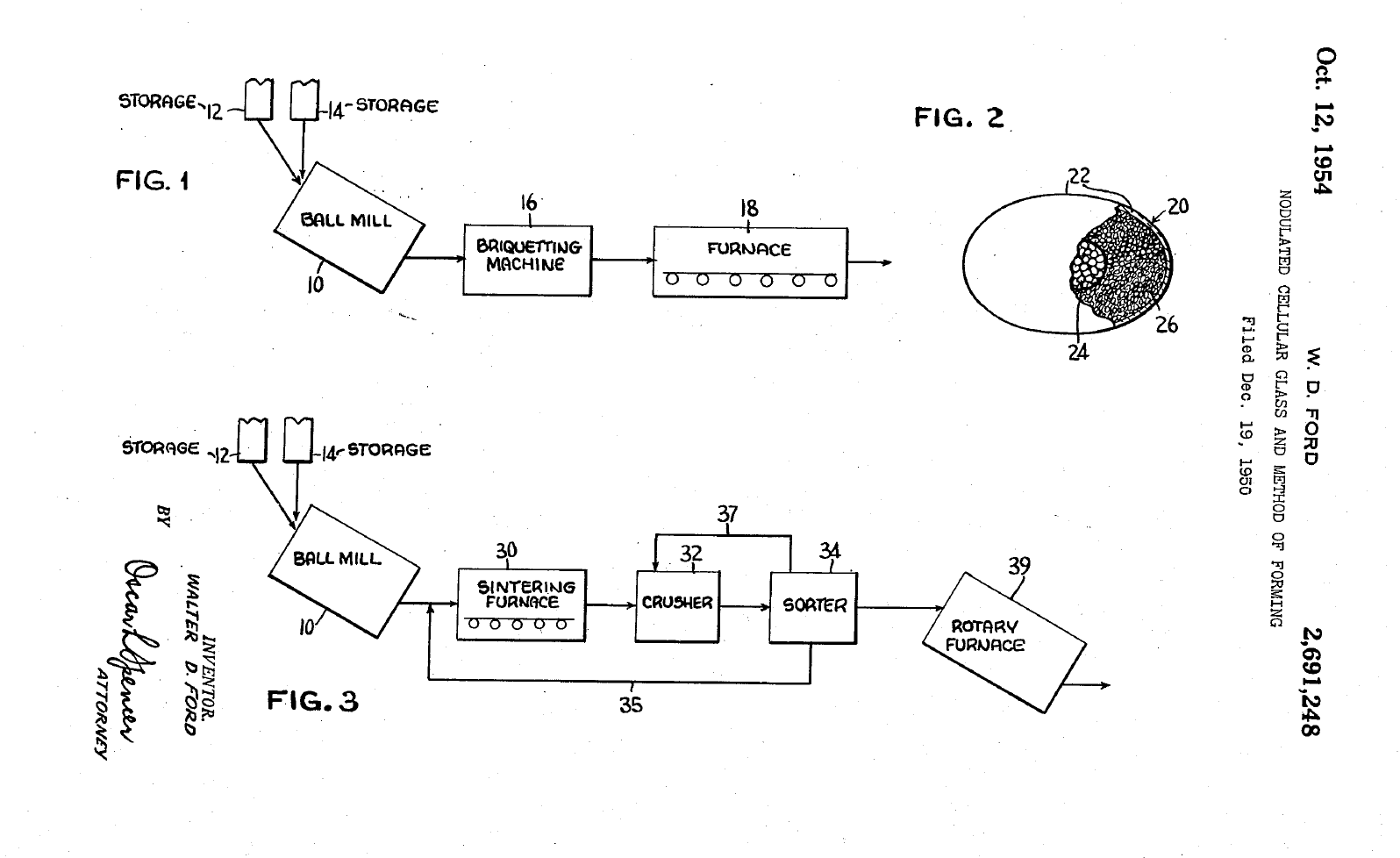
US patent 2691248 describes the powder method (with ball mill) with soda lime glass and carbon black and mentions the importance of sulfate in the glass.  “Preferably, the glass will contain suitable amounts (.08 to 2.5%) of an oxygen-giving agent, such as S03 If not, ferric oxide or antimony trioxi-de (in amounts of 0.1 to 8%) may be added to the pul~ verized glass-carbon mixture. The glass is pref erably pulverized together with about 0.1 to 2% by weight of carbonaceous materials to form a mixture, 95% of which will pass a screen of ‘200 mesh. The carbon may comprise lamp black, carbon black, coal, or coke in amounts of 0.1 to 5% of the mixture.” The densities obtained with this patent are about 250 kg/m³, close to the commercial densities of today. This patent was originally developed for the production of pellets.

walter ford

The thermal insulation world is certainly not sleeping.

logo_smallWe found two nice innovations based on nanotechnology with BASF. Slentex and Slentite are respectively an non-organic and organic thermal insulation materials based on aerogel. Aerogel materials are microporous, which means they have cells in the nanometer range. In these cells, thermal gas conduction is strongly reduced, because the gas molecules have a much larger probality to collide with the cell wall than with another gas molecule. In cellular glass with cells of about 1mm, gas conduction disappears at about 1 mbar but in case of Slentite and Slentex, this situation is already present at atmospheric conditions. For that reason, they publish thermal conductivities of 0.017 and 0.019 W/mK respectively to compare with 0.040 – 0.050 W/mK for cellular glass.
VIP (vacuum insulated panel) thermal insulation with these materials as base material should reach 0.005 W/mK while the absolute pressure can be 10 mbar or a bit more. Today, we can buy thermal insulation with 0.055 W/mK to 0.005 W/mK or about a factor 11. This means that 1cm VIP is equivalent with 11cm GLAPOR, but I am sure that after 50 years GLAPOR measures exactly the same value while I doubt that the VIP will be lower than 0.017 W/mK. The foil around the VIP and the welding is the weak point. The future is in my opinion the fusion of all materials to remove the weak points.