Cellular glass with 57% discount

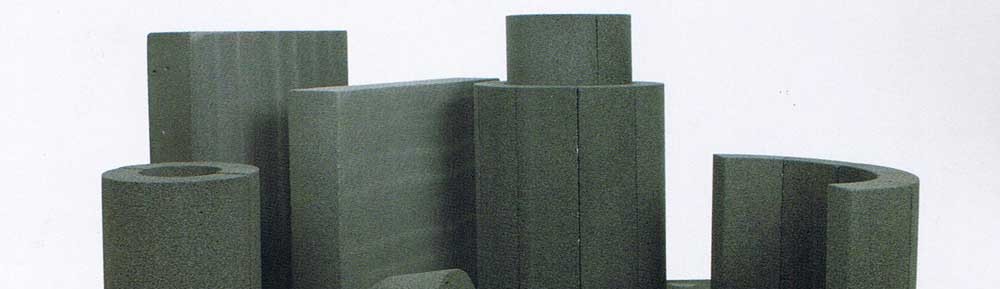
logo_smallBetween Turkish building contractors, it is well known that today cellular glass with thermal conductivity 0.041 W/mK can be purchased with 57% discount on the offical price list. It was not clear whether the source is Chinese, European or American but it is important news. It seems that cellular glass as a niche product is almost dead and low margin mass production cellular glass is the future. I started this blog with the following mission: “It is our mission to lower the prices to make cellular glass available for a larger group of people.” and this seems to happen after less than 3 years.

In our view, GLAPOR cellular glass has contributed a lot in this price drop due the development of the following technologies:

  • foaming recycled glass, unfit for botlle or flat glass production with a revolutionary recipe based on glycerin and water glass. This avoids the investment in and use of a glass melting furnace.
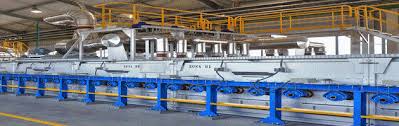
  • continuous foaming of a 3m wide ribbon, approaching the final rectangular shape.
  • direct grinding and sawing to larger dimensions (2.8 x 1.5 m) avoiding the use of an (organic) adhesive and paper to manufacture a (larger) sandwich with small cellular glass plates.

In our opinion after further R&D within 3 years, cellular glass, directly foamed from recycled glass (0.050 W/mK) will be sold at 150€/m³ while cellular glass with a special glass composition (ZES cellular glass = 0.040 W/mK) will be priced 200€/m³. To reduce labour cost, the low density boards will be generally sold with  80 x 120 cm (Europallet) dimensions. The mold process is obsolete and will disappear, except for extreme thicknesses (>20cm) and special shapes.

The melting furnace and grinding equipment are still a heritage from the bottle glass / cement industry. We expect that they will be replaced by a one step process reducing the energy consumption with about 50%. At the end, cellular glass will be a direct competitor of mineral wool at the same price level. We expect that the current price drop is only the start like small earth vibrations are announcing an earthquake.

But moreover, we expect that many cellular glass gravel production lines (700,000m³/year at 50€/m³) will be converted to board lines by adding an annealing furnace (CNUD EFCO) and finishing equipment increasing largely the production capacity of low priced cellular glass boards. We also expect that the smart glass recyclers will make the money with this evolution.

2016_central_italy_earthquake_magnitude-svg


Hygric and thermal simulations with HT flux.

logo_smallThe calculation of thermal transport and hygrothermal simulation happens by solving differential equations. These equations can be solved with the finite element method. This method became very popular thanks to the enormous calculation power of recent personal computers.

htflux-logo1HTflux, a company founded by DI Daniel Rüdisser, has written a very userfriendly software, which is able to calculate most thermal / hygroscopic transport in 2 dimensions. This software can be tried out for 30 days and later on, it costs only 500€/year.

The nice thing is that it can be clearly demonstrated in a lot of cases that condensation spots can be eliminated by using cellular glass.

BELGLAS BVBA will take a license to be able to show the necessity of cellular glass in some constructions. This can be done on construction drawings before the actual construction, avoiding a lot of damage and cost.


The thermal diffusivity of cellular glass

logo_smallWe had a request of a customer about the thermal diffusivity of cellular glass. Generally, he had three questions:

  • What is the meaning of thermal diffusivity besides thermal conductivity?
  • What about the different types of cellular glass and their respective thermal diffusivity?
  • Is it an important parameter for standard applications?

The thermal diffusivity is defined as thermal conductivity / (specific heat * density) which gives  0.48 mm²/s for GLAPOR cellular glass and 0.34 mm²/s for solid glass. Because all cellular glass types have about the same thermal conductivities for the same density, we can generally state that the thermal diffusivity ranges from 0.37 to 0.55 mm²/s for cellular glass. The following link gives this property for all kind of materials.

The thermal diffusivity give us a measure how fast a system goes to thermal equilibrium. If we heat copper with our finger, the new equilibrium is attained fast (111 m²/s) and we have a cold feeling. If we heat glass with our finger, it takes more time to reach equilibrium and the glass feels less cold. Once the equilibrium is reached, the thermal diffusivity does not play anymore.

Thermal diffusivity has a minor effect on the inner climate of buildings. If wood (0.08) is used, the building will need more time to come into equilibrium. On the other hand, this property is very important during the design of a factory. It is directly related to the length of a production line for cellular glass because a lower thermal diffusivity is harder to anneal, it involves a longer lehr.

CNUD EFCO

Dynamic thermal conductivity measuments are all measuring the thermal diffusivity and the thermal conductivity is determined from this value by multiplying with density and specific heat.

CRU02_2_LCD_datalogger_system_webv1601

Microsoft Windows follows BELGLAS advice;-)

logo_smallBELGLAS uses the open source UBUNTU Linux operating system for his own purposes but with bigger customers, we work on their PC, which is always a Windows operating system. Updates are always irritating but this time, we were very happy.

imagesIt was announced that WINDOWS should have integrated the Ubuntu BASH shell, which is a typical LINUX operating system. This BASH shell works well within the WINDOWS system besides the POWERSHELL and should allow to run every program which runs under Ubuntu Linux. We tested already the GNU FORTRAN compiler and it seems to work well.

DownloadBELGLAS is now able to deliver programs which can be run on a WINDOWS computer although they were developed with GNU FORTRAN under LINUX. All the programs, written by BELGLASCZ will be available on a Dropbox server after simple request for known users.

FORTRANThe programs will not be open source because the FORTRAN source will not be shared. The programs are free to use without any responsibility for BELGLAS. The following programs will be shortly free of charge available:

  • calculation of the thermal stress during annealing
  • determination of the thermal conductivity with the low cost BELGLAS thermal conductivity measurement system.
  • calculation of the thermal stress on a cold and hot pipe
  • simulation of glass foaming
  • calculation of a budget price for a cellular production environment (CAPEX)
  • calculation of cellular glass production cost (OPEX)

For all these programs, BELGLAS will perform installation and consultancy if needed at an acceptable fee.

win-lin marriage

GLAPOR cellular glass and KINGSPAN PIR in the LEGO-house in Billund, Denmark.

logo_smallThe LEGO-house in Billund, Denmark is a project, which was started from a LEGO-scale model. The current LEGO bricks are as old as the writer of this blog and are still loved by creative children. The building is based on these interconnected LEGO bricks and as a consequence, a flat roof is chosen.

Lego_house

It was decided to go for passive housing with a large resistance against fire. Mineral wool at a large thicknesses (passive housing) is sensitive to natural convection with low outside temperatures. On the other hand, PIR and other polymer foams were not accepted due to the combustibility.

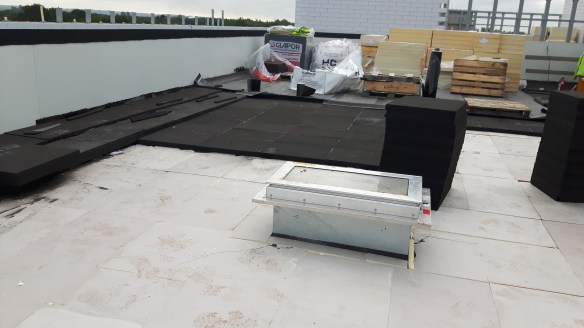
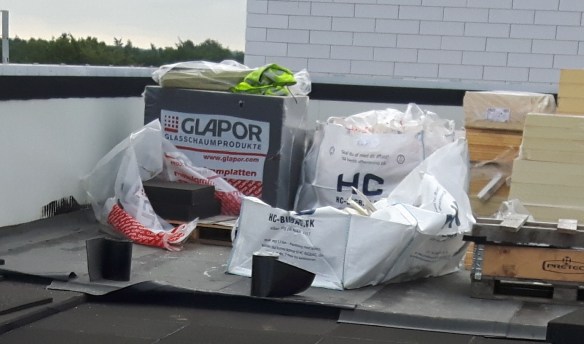
However, the combination of PIR and GLAPOR cellular glass guarantees a passive housing thermal resistance at moderate thickness without any fire risk and without any risk for internal natural convection. This principle was already suggested a long time ago and recently KINGSPAN and GLAPOR started a collaboration. In the following, several pictures of the installation of the GLAPOR-KINGSPAN system are given.

GLAPOR cellular glass on a Danish cultural symbol under the nose of Rockwool Lapinus, another Danish symbol, “Il faut le faire”, Cellglasplader.

20160719_084006_selec

20160719_084006


20160719_08402520160719_08403320160719_084044

IMG_0619IMG_0621IMG_0625

Building a barrier against humidity and radioactive gases

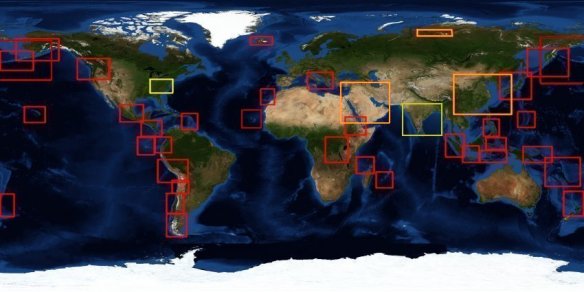
logo_smallThe problems with humidity, diffusing from the soil into the house is already known for a long time. Less known are the problems with radioactive gases like Radon and sulfur dioxide gas in some countries. The picture hereunder shows where sulfur dioxide is emitted by the vulcanic underground (red squares).

visible_clickable_map2M

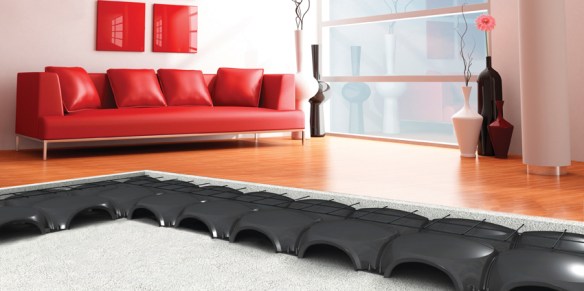
Every problem has a solution and the Daliform group came with a good idea. Under the floor, they install cavities, manufactured from plastic, to be able to ventilate these unhealthy gases.

iglu-vespai-ventilati.jpg

On top of the ventilated space, thermal insulation has to be installed because we do not want to heat the ventilating air with expensive energy.

Although the above solution works, the combination ventilation / thermal insulation can be done with (closed cell) cellular glass. GLAPOR cellular glass is 100% impervious to these and other gases (like ordinary glass) and eliminates the need for a ventilated space. On top of that, it functions of course also as thermal insulation with a high load bearing capacity.

I would be surprised if the combination of the cavities / XPS thermal insulation is not a lot more expensive than GLAPOR cellular glass, installed on the concrete with hot bitumen. And we may expect also a much longer life time with the cellular glass solution, which is also proven to be ecological.


Reinforcing foamed glass gravel with geosynthetics

logo_smallWe are used to build on stable terrain and disregard the possibilities of less stable ones. But sometimes, we have not the choice (we don´t make a curve with a railway due to terrain conditions) or we can buy such a land at a very good price. In these cases, we can use geosynthetics to stabilize the terrrain.

GLAPOR PERMAFROSTWith GLAPOR cellular glass gravel, it is advised to use a geotextile to separate the gravel from the soil. Without using this textile, intermixing between gravel and soil will induce a cold bridge into the gravel. In the picture on the right, this textile is called geogrid. In reality, a geotextile is used with the following specifications.

A gravel bed is only loaded in compression or shear and can be described as a cellular structure based on cellular glass. This gravel bed does certainly not behave as a beam, it has no bending strength at all. As a consequence, all the bending strength of the system has to come from a (concrete) plate on top of the gravel.

CellularConfinementSystem-HexBut today, we have also cellular confinement systems, also known as geocell. The brand name Geocell Schaumglas is also used for foamed glass gravel, but this is clearly not what we mean, when we speak about geocell. The picture on the left shows an old application in Alaska.

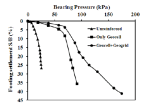
footsettlementThis geocell  structure, filled with clay, induces an important extra bearing capacity compared to unreinforced clay like shown in a paper paper. Like can be observed in the graph, the effect is dramatic if geocell and geogrid are used. For a settlement of 20%, we have an increase in bearing pressure of at least a factor 3. This is defined as the load bearing improvement factor.

PRS roadThe (beam) effect is also demonstrated in a paper paper about improved road constructions with geocell reinforcement. Indeed, the geocell helps to distribute the load of a tire over a much larger surface, increasing the life time of the road. In this case, the experiments were done with PRS Neoweb, a geocell based on Neoloy. This polymer is an improvement, compared to HDPE, which is usual used for geocell.

At this moment, we can ask ourselves what we can do with a geocell, filled with GLAPOR cellular glass gravel? At least, the application in the previous post will be improved. Indeed, roads on foamed glass gravel will have a much larger life time. But in a lot of cases, we can construct a lighter structure than with ordinary gravel, thanks to the wedding of cellular glass gravel and geocell. Even for the standard house application, the use of geocell will induce extra stability allowing to reduce the thickness of the concrete slab on top of the foamed glass gravel.


Foamed glass gravel against permafrost instabilities

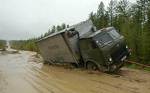
logo_smallAbout 24% of the Northern Hemisphere lives with permafrost, which means that the underground remains frozen during at least two years. However, there is always an active layer which thaws in summer. The water is not able to be absorbed by the froozen underground and this induces a swamp unstable underground. The following pictures are a typical example of this unstable underground for buildings and roads.

PERMAFROST HOUSEPERMAFROST TRUCK

PERMAFROST AIRPLANEThese instabilities can be solved by using GLAPOR cellular glass gravel like shown in the following schematic drawing. This configuration with about 30 cm gravel avoids that the underground thaws or eliminates the active layer. This system can be used for houses like alreay shown in previous posts but also for roads, like calulated in a paper of the Norwegian governmentGLAPOR PERMAFROST
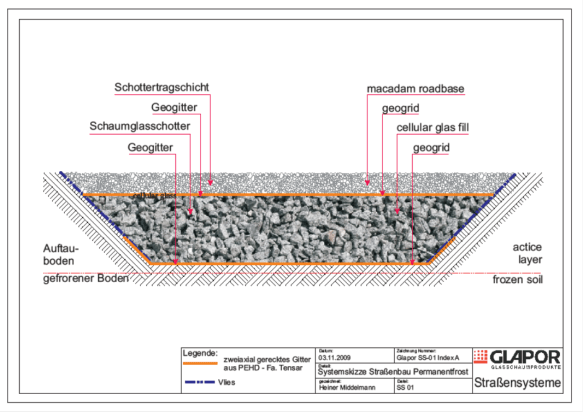
Foamed glass gravel is a light strong material, able to bear the load of a road and insulate the underground from the climate changes. It allows cheaper more stable constructions by recycling waste glass.

Do we never learn ? Petroleum Storage Terminal Explosion in China – Thermal Insulation Burning

logo_smallI found the following article about a petroleum storage burning with even a movie. Ken Revart writes:

 kent revardIt appears to me that the the thermal insulation on the spheres begins to char at the equator from radiant heat and then ignites after subsequent explosions. I understand that this facility installed PUR/PIR foam insulation for cold process. I have to wonder how the pipe insulation stood up to the fire. Did the PUR/PIR melt away and contribute to the cascading affect of the explosions.

What are your thoughts or experiences of fire protection from mechanical insulation in these scenarios? (I skipped the last sentence to respect a legal settlement)

fire_china.png

With GLAPOR cellular glass, this catastrophe would never happen because cellular glass is non-combustible. It is produced from 99.9% glass without using any binder. In fact, reinforced with a ceramic mesh on the opposite side of the fire, it behaves as a very good fire resistance.

EIRICH in the mix for environment-friendly insulation materials

logo_smallI found the following article about mixing for glass foaming on the following  Eirich site:

Thermal insulation materials are becoming increasingly important in relation to achieving the targets set by policy-makers and society for saving energy and reducing CO2 emissions from homes and industry. Foam glass as an insulation material is becoming particularly important – produced using EIRICH mixing technology, as for example in a new production plant of ZАО Коmpanija STES-Wladimir in Russia, which commenced operations in the summer of 2014.

Insulation materials can be generally classified into two groups, namely organic insulation materials and inorganic insulation materials. What all the materials have in common is that they have a lot of hollow spaces and therefore have a large volume for low weight, in other words they contain a lot of air, which is a relatively poor conductor of heat. For the use and performance capability of insulation materials, the reaction of the material to moisture and fire is of importance in many cases. Foam glass scores well in this respect.

In the production of insulation materials it is important to avoid energy-intensive processes and to use raw materials which are available without restriction as far as possible. Foam glass is made mainly from waste glass; the energy-intensive preliminary stage of producing glass from silica sand is not required. The finely ground glass has carbon carriers added to it and is then fed into a foaming furnace. At temperatures of up to 1,000°C the carbon is oxidized, with gas bubbles developing which induce the foaming process. The foamed blocks have a closed cell structure with thin glass walls and are easily workable. The insulation materials that are cut from them are heat-insulating, pressure-resistant, vapor-resistant and waterproof, as well as being dimensionally stable and resistant to acid.

According to the information supplied by the company, STES uses (unlike other companies that also use EIRICH preparation equipment) a unique patented production process in its production system, located in the town of Wladimir in the Moscow conglomeration, which delivers foam glass of particularly high quality. It has very small cells which result in high strength with a low raw density. Under the brand name of NEOPORM, the company not only supplies insulation materials for buildings but heat-insulating molded parts for power stations (e.g. for piping) as well as for the chemical and petrochemical industries. The products are considered to be the highest quality insulation material currently available on the market.

In trials it was found that the EIRICH mixing system, with its facility for control over the power input to the mixture on the basis of the shape and speed of the mixing tools, is the most suitable system for ensuring that the desired properties of the glass powder mixture can be achieved in a consistent quality. This was the reason why the two directors, Mr.  Dudko sen. and Mr. Dudko jun., as well as deputy general director, Mr. Sinowjew, decided to choose EIRICH for the preparation of the mixture (including storage, feeding and mixing).

Other European suppliers were involved in the project along with EIRICH, including ZIPPE Industrieanlagen GmbH, Wertheim, with equipment for primary cullet processing, and Ehinger Impianti S.r.l., Milan, with grinding units.

Glass-based insulation materials are currently very much the trend throughout the world. In recent decades EIRICH has supplied more than 50 mixers throughout the world for the preparation of foam glass, expanded glass and glass gravel. Sophisticated formulas require good mixing technology. According to reports from customers, there are major advantages for preparation compared to plowshare mixers: Higher compression strengths by up to 50%, and much less wear on the mixing tools.

36384910-Industrial-mixer-on-counter-in-the-kitchen-of-the-bakery-Stock-Photo