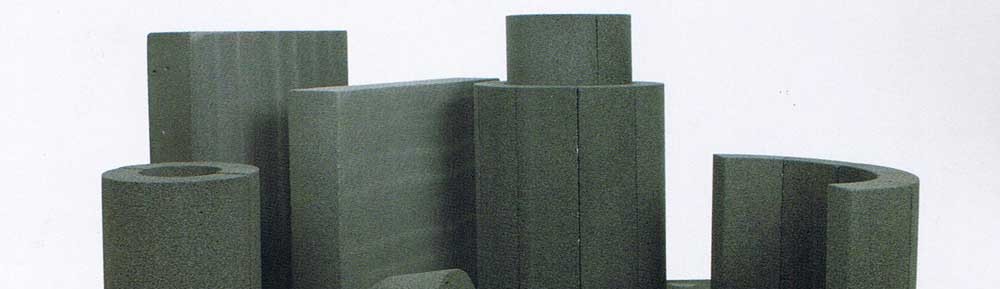
 Open cell cellular glass is not a hot topic today. In a previous blog, we discussed a method to produce this open cell ware by opening closed cell cellular glass with hydrostatic pressure.
Partially open cell foam glass can be produced with CaCO3 as foaming agent but the cells are still partially closed. This product is less interesting because it can not be used where we need vapour tight cellular glass and it will induce problems where we need open cell ware. Acoustic absorption will be rather poor and also the ventilated thermal insulation system will face large pressure drops.
 But it seems that waste glass can be foamed into >90% open cell material. I found the following leaflet on the website of the Ngee Ann Polytechnic school in Singapore. This website gives a large contribution to green building and sustainable development. They focus especially on foaming waste glass boards without remelting like GLAPOR is doing in Europe.
In my opinion, this material is well suited to be used as dynamic insulation, like already mentioned in different posts about clean inside air and improved animal welfare sheds. But it can alse serve as a cheap fiber free acoustic absorption material like mentioned in the previous post.
It is clear, there is a future for open cell glass foams based on waste glass without remelting with the folowing characteristics.

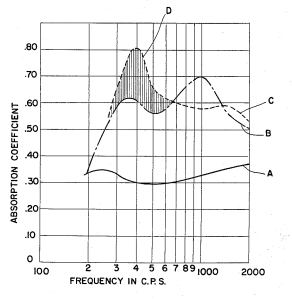 This open cell foam can be used as an acoustic absorber, fiber free and non-combustible. I guess this is still a unique product. This application was
  In the race to the holy grail vacuum cellular glass, there is a discussion about which thermal conductivity could be reached. In my opinion, lower than 0.021 W/mK is not possible today and this open cell material in a vacuum bag below 0.1 mbar could prove that.
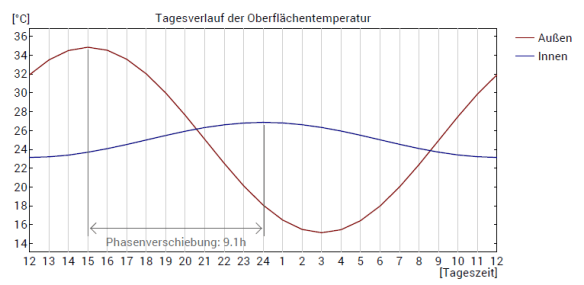
 This website, between the many U-value calculators, is very interesting for the following reasons:
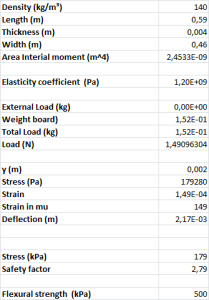 Today, there are still small boards on the market. For example, in case of 59 x 46 cm boards with 140 kg/m³ density, the boards have to be only 4mm thick to sustain its own weigth with a span of 59cm. The minimum thickness is about 3cm, so bending under its own weight was never an issue. It explains why flexural strength gets much less attention than compressive strength.


 Indeed, the continuous foaming project was developed at GLAPOR for three reasons:
 These dogma are indeed out of date and confirms the title, choosen by the Glass International Editor, Greg Morris:
  BELGLAS BV