 Michael F. Ashby is a Cambridge University professor about new (and old) materials. By accident, I found his textbook about engineering materials Vol. 1 on research gate.
The textbook describes the important physical properties and physcis behind these properties. But also the availability and price are given some attention.
 The book is of course illustrated with case studies. Hereunder we cite the case study about the support of a large telescope mirror.
Introduction
The worlds largest single-mirror reflecting-telescope is sited on Mount Semivodrike,
near Zelenchukskaya in the Caucasus Mountains. The mirror is 6m (236 inches) in
diameter, but it has never worked very well. The largest satisfactory single-mirror
reflector is that at Mount Palomar in California; it is 5.08 m (200 inches) in diameter. To
be sufficiently rigid, the mirror (which is made of glass) is about 1 m thick and weighs
70 tonnes.*
 The cost of a 5m telescope is, like the telescope itself, astronomical – about UKE120 m or US$180 m. This cost varies roughly with the square of the weight of the mirror so it rises very steeply as the diameter of the mirror increases. The mirror itself accounts for about 5% of the total cost of the telescope. The rest goes on the mechanism which holds, positions and moves the mirror as it tracks across the sky
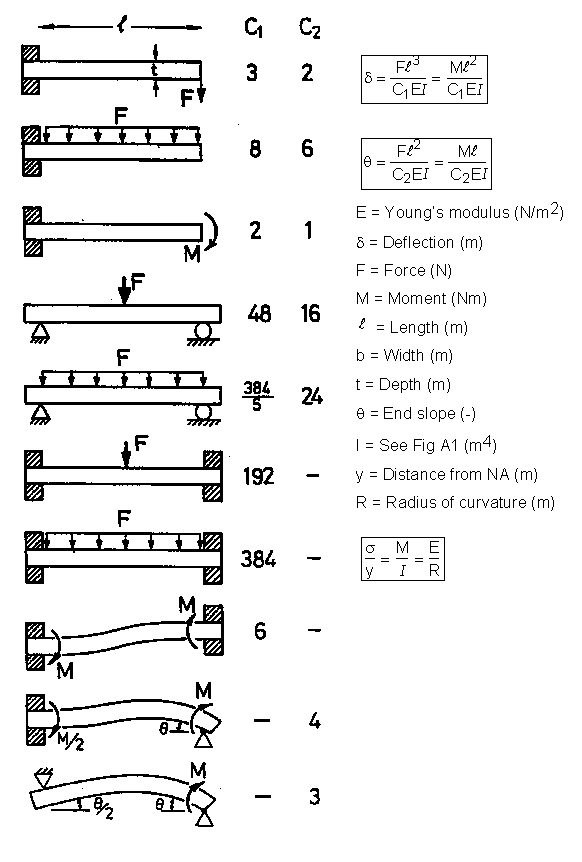
(Fig. 7.1). This must be so stiff that it can position the mirror relative to the collecting system with a precision about equal to that of the wavelength of light. At first sight, if you double the mass M of the mirror, you need only double the sections of the
structure which holds it in order to keep the stresses (and hence the strains and deflections) the same, but this is incorrect because the heavier structure deflects under its own weight. In practice, you have to add more section to allow for this so
that the volume (and thus the cost) of the structure goes as M2. The main obstacle
to building such large telescopes is the cost. Before the turn of the century, mirrors were made of speculum metal, a copper-tin alloy (the Earl of Rosse (1800-18671, who lived in Ireland, used one to discover spiral galaxies) but they never got bigger than 1 m because of the weight. Since then, mirrors have been made of glass, silvered on the front surface, so none of the optical properties of the glass are used. Glass is chosen for its mechanical properties only; the 70 tonnes of glass is just a very elaborate support for 100 nm (about 30 g) of silver. Could one, by taking a radically new look at mirror design, suggest possible routes to the construction of larger mirrors which are much lighter (and therefore cheaper) than the present ones?
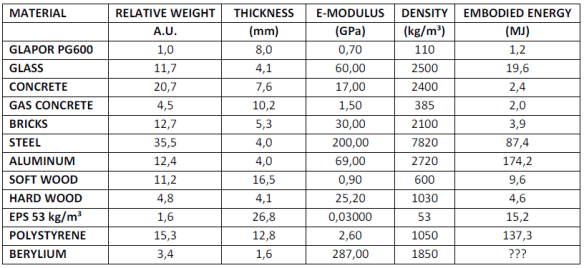
At the end, it is summarized in a material index, which is calculated for a few materials.

The following conclusions are taken:
The optimum material is CF’RP. The next best is polyurethane foam. Wood is obviously
impractical, but beryllium is good. Glass is better than steel, aluminium or concrete
(that is why most mirrors are made of glass), but a lot less good than beryllium, which
is used for mirrors when cost is not a concern.
But at the end, we find the inventive step:
The most obvious obstacle is the lack of stability of polymers – they change dimensions with age, humidity, temperature and so on. But glass itself can be foamed to give a material with a density not much larger than polyurethane foam, and the same stability as solid glass, so a study of this sort can suggest radically new solutions to design problems by showing how new classes of materials might be used.
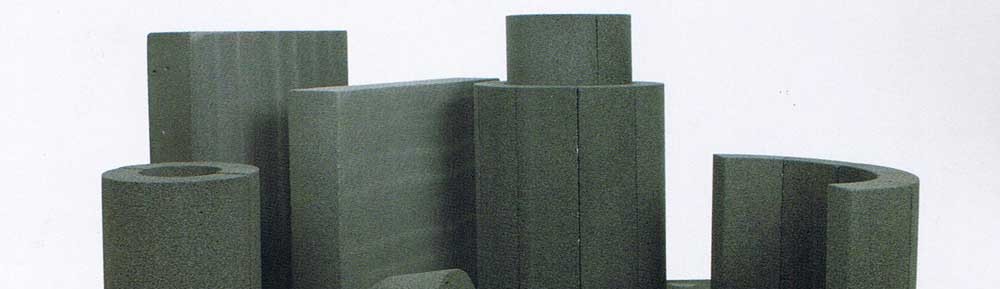
Indeed, with low density cellular glass, we arrive at a material index = 0.1, which is the best value. However, with the usable dimensions of cellular glass (60 x 40 cm), the idea of building a large mirror cannot be realized with cellular glass. But the continous glass foaming technique as developed by GLAPOR allows dimensions up to 3.2 m. Even wider up to 6m (like for float glass) is possible in case there should a market for this large product. Indeed, light structures built from foamed recycled glass have a certain future.

 Also Engineering Materials vol2 is available in pdf on nanotech. This book contains a nice chapter about glass and the production of glass articles. Also ceramics and more particular concrete are mentioned with a lot of data to be used for the calculation of an order of magnitude.


 In this post, I like to put the attention on more academic / laboratory contributors. Indeed, cellular glass is born on the scale of a cup of coffee and later on further extended to larger dimensions, today up to 2.8m x 1.2m.
 Bernard Long, a scientist working once for St Gobain Glass, filed in 1938
  Boris K. Demidovich, has published in 1972 a
  Prof. Dr. Bernardo Enrico, a professor at the University of Padua developed the cold foaming of glass like already described in a
  Prof. Dr. Lorna Gibson is a cellular solids expert at MIT. By studying her
  Prof. Dr. Michael F. Ashby is a material engineering expert at Cambridge Univerisity, which is already mentioned in a
  Prof. Dr. Christian Maes, Physics department of the KU Leuven, Belgium discovered that cellular glass fails under a compressive load in a diffusive way. This important statement is probably valid for all kind of fragile heterogeneous materials. This was already discussed in a
  Recently there was a meeting of a group of people, who will change the cellular glass world thoroughly and even a large part of the mineral insulation world. It is a combination of knowlegde, huge ecology loving capital and direct communication without any hiearchical borders.
 Dr. Oleg Sharykin (second from right) is an important investor in the Russian cement industry, who believes strongly that ecology is the future for this planet. A long time ago, he recognized the assets of the
  Walter Frank (right side on above picture) is the founder of GLAPOR and took beyond any doubt the largest risk. Therefore, I would rank him as the largest cellular glass hero of all times. Walter was a sales engineer and sold for
  to improve ecology. He did not jump into the thermal conductivity rat race, started by the
 Many cellular glass heroes worked here but I mention only two of them, which are today retired.
 Dr. Rainer Zorn was a typical laboratory guy, tuning the process and the furnaces. On top of that, he extended my mind with other recipes to foam glass, many of them open celled. Together with Fritz, he took a
  It is probably not a coincidence that during the Heraklith times, a certain Walter Frank, today CEO and founder of
  Pierre Gérard, a smart and fast mechanical civil engineer was also an efficient cost cutter. Pierre understood very fast that the most efficient cost cutting was improving the process. He was an enormous support for me, especially when the tunnel seemed endless long. His father, Paul Gérard was the collaborator of Louis Troussart during the discovery of the thermal history of glass. Pierre is retired and is spending his time with travelling with his wife.
 Jos Bellens, a laboratory chemist passed away much too early. His important R&D work is not public domain but in his second career, he became an outstanding safety engineer. I will never forget him.
 Marc Kolenberg was about everything: electronic, electrical and mechanical engineer, software developer and most of all production manager for cellular glass. Marc did not know any limit to reach what he considered as possible. Without him, my largest project should never run. Marc is retired and lives close to Diest with his family and dogs.
 Robert Havel started as a worker and became production manager of the cellular glass factory, producing the highest quality ever. After having done the startup of a cellular glass factory in China, Robert´s ambition drove him in another direction. He lives in Klasterec Nad Ohri in the Czech Republic with the lovely Jitka Havlova and their child.
 Jean Melchior, a civil engineer from Luxemburg is known as an extremely strong marketeer for cellular glass. He understood very early the importance of ecology for the thermal insulation world. Not cost cutting but ecology was his drive to support me for my largest project. From him, I got the nice title “free electron”, although that property let him explode many times. Jean is retired against his will and lives in the center of Belgium, studying Machiavelli.
 Enrico does not want to limit him self to the foaming of “easy” soda lime glass but he wants also foam glasses which are eager to crystallize. Such glasses are already crystallizing during sintering and does not foam due to the crystallization. Glasses obtained from

 The standard cellular glass like
  and transport 200 kg, which is more than one typical pallet GLAPOR cellular glass. The drone can operate 30 minutes with one full battery. And now I dream about
 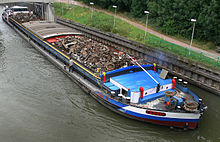 A typical
  Cellular concrete or AAC (
 The autoclaved aerated concrete products are made of
  For the low density, we observe: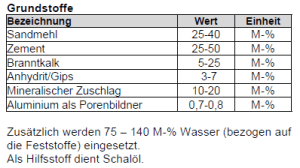
 In all cases, sand, lime (CaO) and gypsum (CaSO4) are bound with cement. The lime is produced by burning limestone at 800°C. Cement is produced from burning a mixture of limestone and clay at 1400°C and fine grinding the residue to a very fine powder. The foaming is done with Al powder and afterwards, autoclaving happens at 180°C and 12 bar to give the foam its strength. In both cases, a lot of water (more than 50%) is heated and evaporated. It is clear that the complete process, including the preparation of the “raw materials” is very energy intensive for the production of AAC.
 On the other hand, we could melt a soda lime glass at 1600°C with sand, sodaash, calcium sulphate and limestone. This glass can be ground to a fine powder and foamed above 800°C with carbon black or glycerin to a closed cell structure or with (fine) limestone to an open cell foam. However, the melting and foaming process is more energy intensive than the AAC process and also the investments are a lot larger due to the high temperatures used. At the end, cellular glass based on fresh raw materials is more expensive. It makes only sense to use this type of cellular glass instead of AAC in case closed cells are a must. This is typically the case in flat roofs and industrial insulation.
 The primary energy per kg is one method to describe the different thermal insulations like done in the this graph. We observe that almost all thermal insulations have a higher primary energy content, even after correction for density and thermal conductivity. These corrections are done in the following graph.
 BELGLAS BV